Some sample images!
We found the time to head to the Huveaune river and try out our new plankton’s net. We took a sample of water there and studied it with our planktoscope. And we found some planktons!
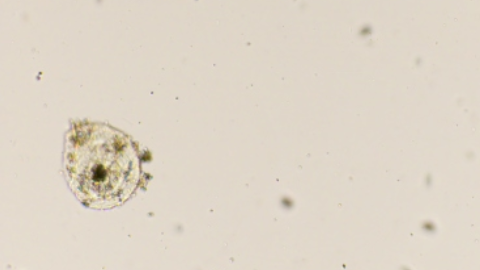
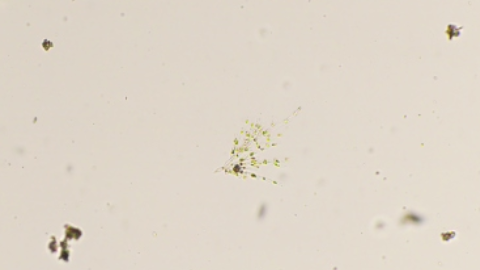
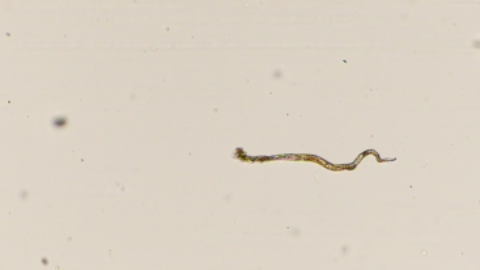
Of course there is no Blue Crab Zoea, since this is not the time nor the place, but it means that our planktoscope works well. We are now trying to make our Python pipeline work so that it can efficiently detect these organisms in the microscop video output and then clean the images.
CGénial 2026 here we come
CGénial is an organization that promotes Sciences. They have a competition for middle and high schoolers. So today we decided to participate and represent Antonin Artaud with our project «À la recherche du crabe bleu ». Thanks to the project we may have the opportunity to work with professionals that might like our project. So this is very exciting! (but first we have to write a report…)
Teachable Machine
Teachable Machine is an AI that we trained for it to recognize the blue crab zoea. In order to achieve this, we first have to define classes: Blue Crab Zoea vs Other plankton. We then find multiple images (the more the better) and feed them to Teachable Machine, so that the AI can learn what are the characteristics of the Blue Crab Zoea.
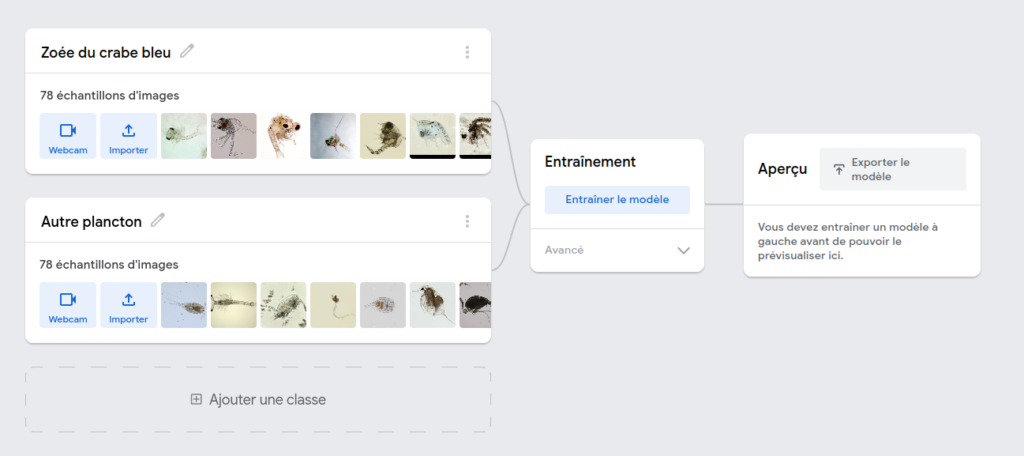
The chosen images must be carefully curated. The background must be clear (just like our planktscope output), and there must be just one plankton visible on the image. It has to be in focus. The AI then trains itself and after that can differenciate between Blue Crab Zoeas and other plankton species.
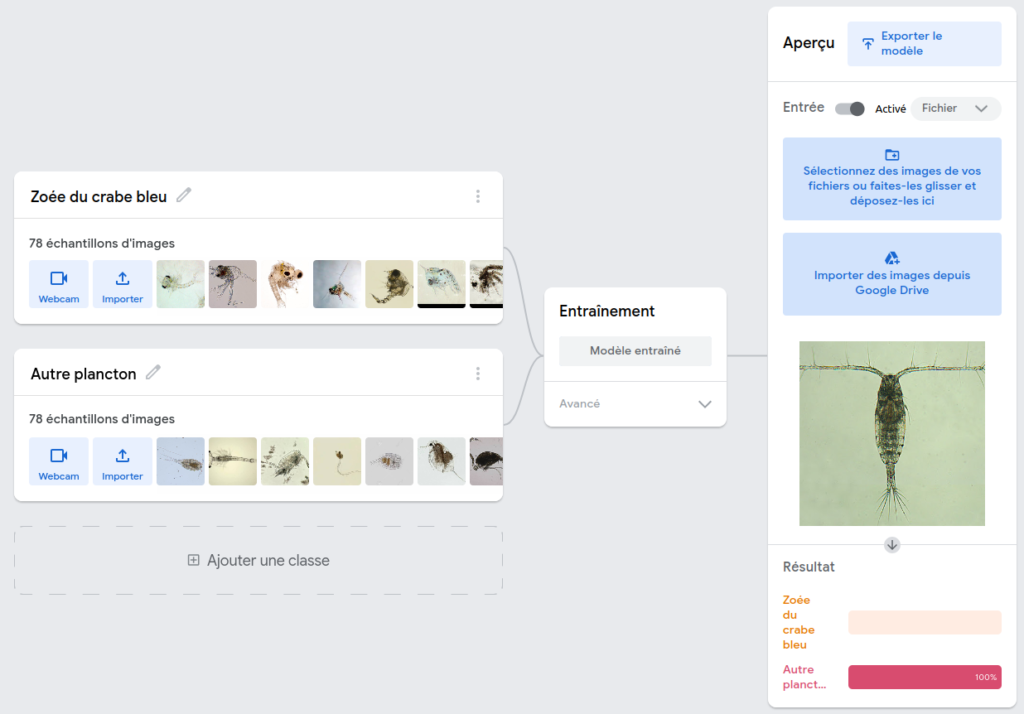
This is a success! Our AI model can now be exported to be used with our Python pipeline.
Our Planktoscope is finished!
After several months of work, we have now finished the plantoscope. Here are its different fonctionnalities, and how it works.
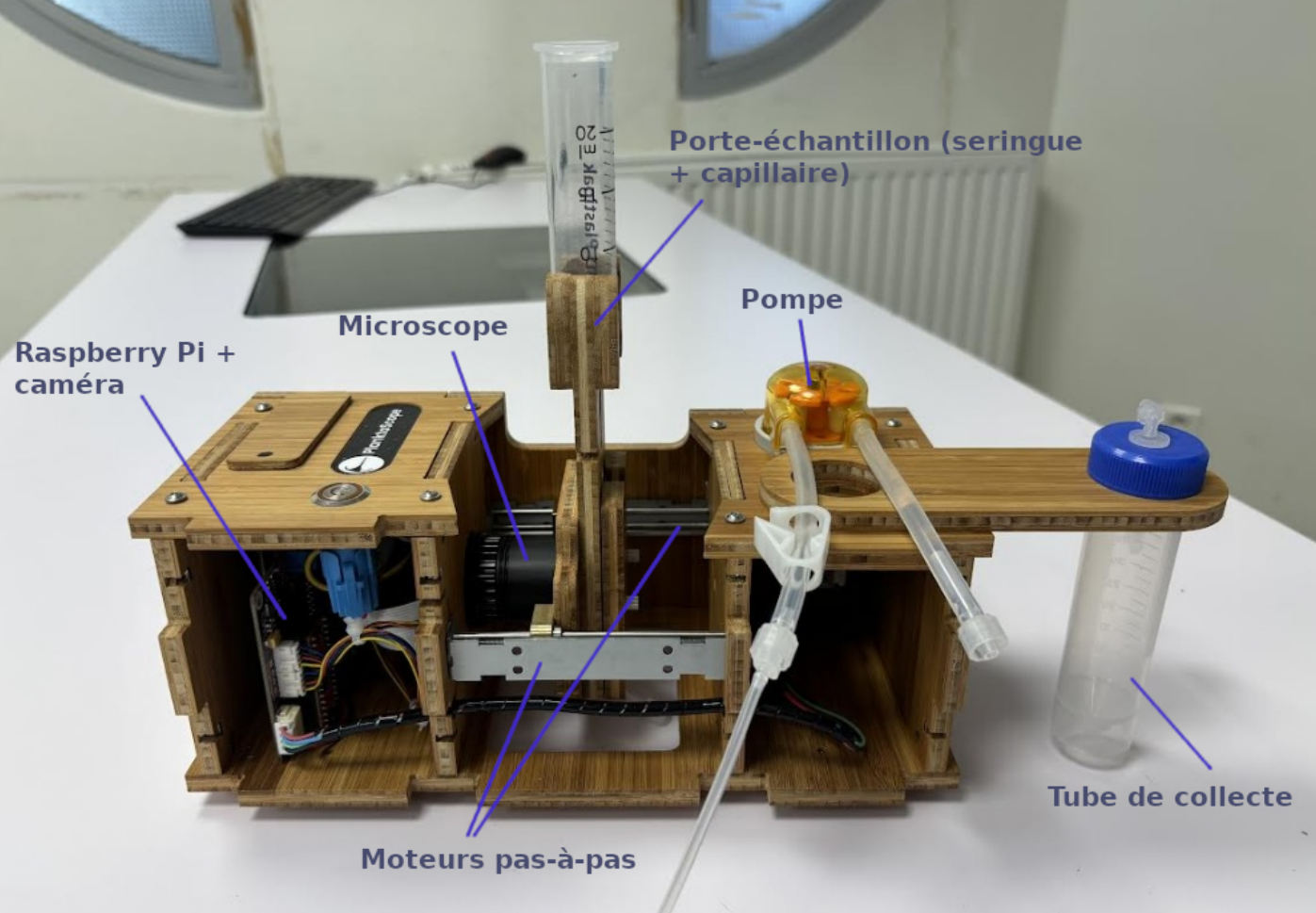
On the left is the Raspberry Pi, the computer that controls our microscop. There is also the sensor for the camera, where we observe the planctons’ imagethrough the microscop.
On the middle one can see a syringe: this is where one put the sample, that will go through the microfluidic path. The sample is moved by a pump (the orange one on the right) and passes in front of the microscop (black, in the middle). We can move the position of the sample thanks to two step-by-step motors, so that the plancton is in focus.
The microscop is made from two lenses, with 12mm and 25mm focal lengths.
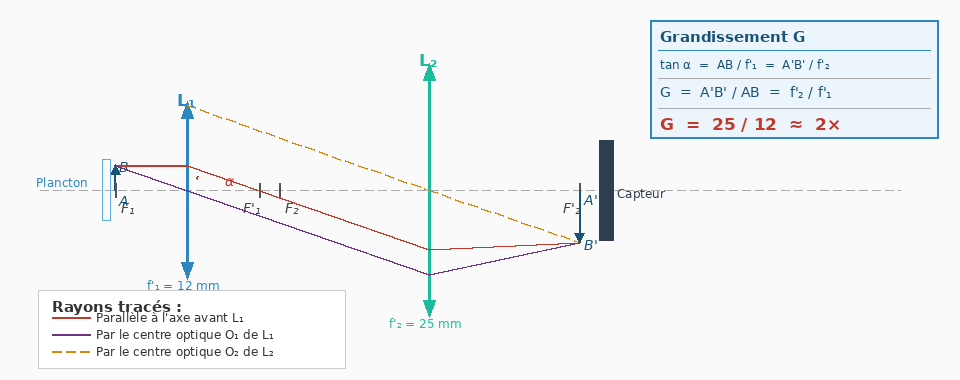
The zoom is x2, which is enough for our use, since the image is read by a sensor and not the human eye. Since the sensor has small pixels, it digitally zooms the plancton image, and one can see on the computer screen!
The Tara’s expedition
Hi, this is Jasmine and Jade from the DNL club. We are going to introduce you to the Tara expedition, which made incredible scientific discoveries. Their goal was to develop high-resolution sampling of plankton, analyse the samples and generate data to understand them. The scientists of the Tara expedition were interested in plankton because plankton is at the heart of the marine environment. For example, plankton absorbs about 30% of carbon dioxide. Plankton is the key to the food chain because changes in plankton have an impact on larger organisms. We can also use plankton to understand changes in light, temperature, salinity and pH, because plankton is affected by these modifications and reflects them.
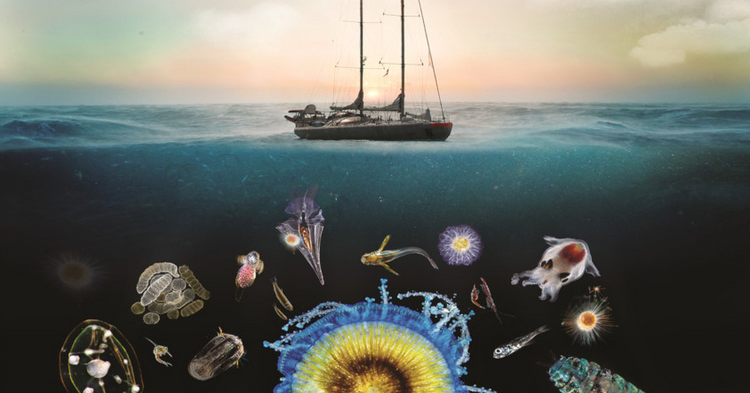
They made five major expeditions in different places.
- Tara Arctic (2006–2008): they collected data on the ice, the atmosphere and the ocean.
- Tara Ocean (2009–2013): it was located in the polar circle ocean.
- Tara Mediterranée (2014): it also assessed the impact of microplastics on the health and functioning of ecosystems in the Mediterranean.
- Tara Pacific (2016–2018): it studied coral reefs in the face of global change.
- Tara Microplastics (2019): it travelled along the four European sea fronts to trace the origins of plastic pollution.
Thanks to these expeditions, we discovered a wide variety of plankton. Plankton is divided into two big categories: phytoplankton, which is the microscopic type of plant, and zooplankton, which includes bacteria, viruses and larval stages of larger organisms. With the Tara expedition, we found about 2.87 billion unknown genetic sequences. You may ask: how did they do all of this? It is simple: they use DNA barcoding. A DNA barcode is a small DNA sequence used to identify species. It must be almost identical within one species and very different between species, so they can be clearly distinguished. And now, with this technology, it is easier to study organismal diversity in ecosystems, facilitating community analysis, species discovery and ecological research. They also use PCR to amplify DNA and do better analyses of the DNA samples and to duplicate them, so they can study a big range of species, but also families.
In parallel with these research activities, the Tara Ocean expedition also aimed to raise public awareness of the issues related to climate change. The expedition also mobilised political decision-makers. This project was led by 250 scientists who help the cause and work for change, and it also advances our knowledge of plankton.
Just like the Tara’s expedition, we will go to different watering places around Marseille to harvest water samples and try to study the blue crab larvae, a species that recentrly migrated to the Mediterranean seaside and invaded its lagoons. We will not be using DNA sampling, but the planktoscope we built and and AI program to recognize and study the blue crabs early development stages.
Sources:
Blue crabs in Southern France
For some years now, the blue crabs have been devastating and have invaded the Canet-en-Roussillon and the Étang de Berre lagoons. This creature eats everything. Today, the fishermen are overwhelmed by the proliferation of this crustacean. This crab is very fast and it threatens the local biodiversity.
They haven’t found the reason for the invasion, so they try to control their number by fishing. The fishermen started to see them in 2017, at first just one or two, and now it is almost every day.
In addition to making species disappear or decrease, the blue crabs prevent the work of fishermen. For example, eel fishermen can’t do their job because the blue crabs have destroyed most of their eels. They are sometimes called “serial killers” because they attack everything.
So some scientists try to help the fishermen and solve this problem. They have given money to study the behaviour and biology of the species, and to try to answer the questions about it. But the species remains and proliferates because the conditions in these lagoons are ideal.
While waiting for answers to their questions, fishermen have put in place tricks to regulate the quantity of blue crabs, like deploying traps or continuing to fish them. They also try to include it in a local dish, because it seems that it is tasty and unusual, but the region doesn’t have a “shellfish platter” culture. The fishermen try to sell it, and the sales are still too low.
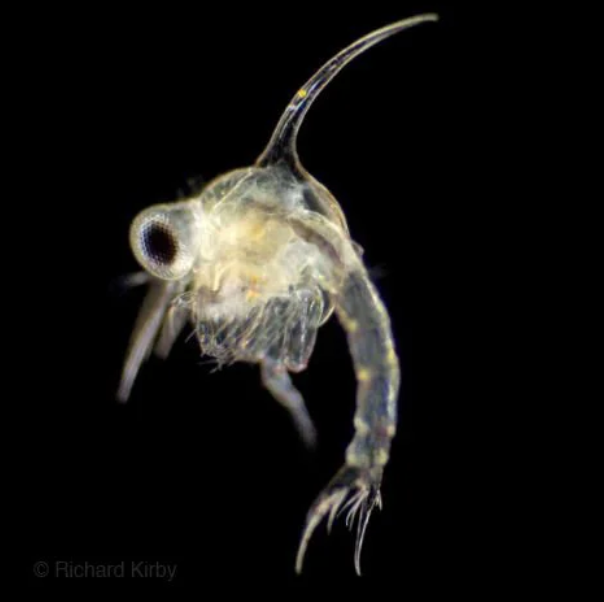
With our highschool club, we are going to try to find the blue crab larvae, called zoea, in places like the Étang de Berre. We are developing an AI program that can automatically identify the blue crab zoea and could help understanding the species and protect local ecosystems.
Sources:
Why study plankton?
It is essential to study phytoplankton because it plays a crucial role in ocean biology and the Earth’s climate. Any change in its productivity can have a major impact on biodiversity, fisheries, and the human food supply, as well as on the rate of global warming. Moreover, plankton serves as a true indicator of the ocean’s health, as its behavior varies according to water and air quality.
Plankton is also vital for ecology: it provides a habitat for many marine species and produces about 50% of the oxygen we breathe. As the foundation of all marine food chains, it plays an essential role in the ocean’s life cycle and in maintaining the balance of our planet.
Our Planktoscope is taking shape
We’ve made a lot of progress in building our Planktoscope!
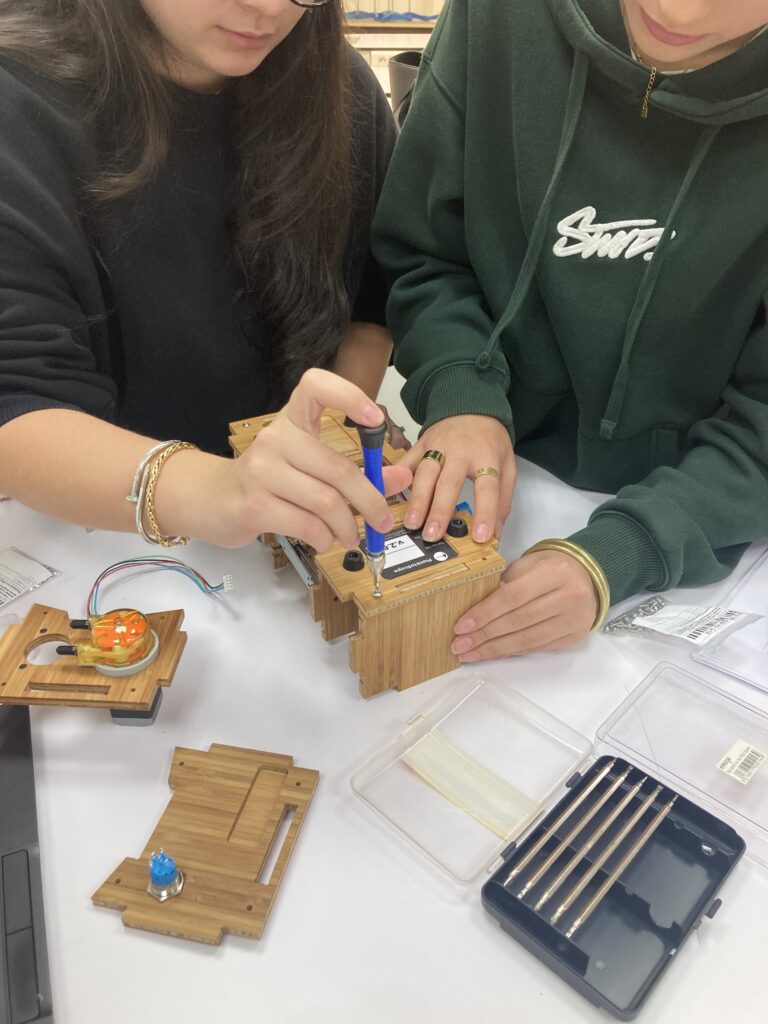
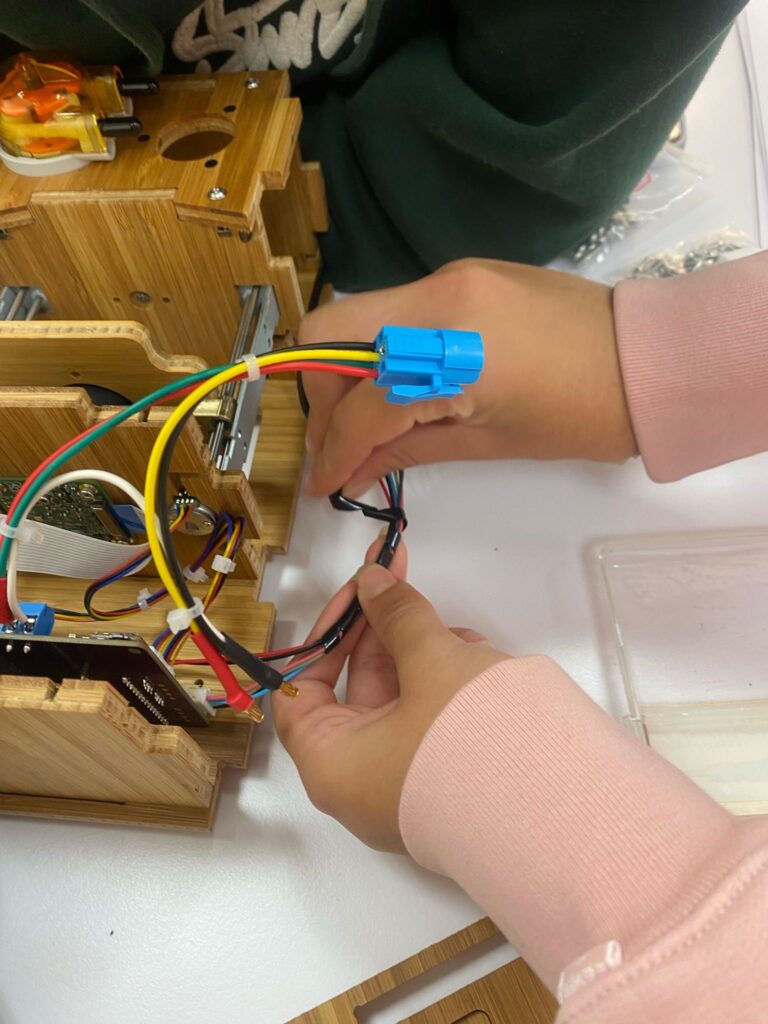
All the elements are now being assembled. On the left, we can see the orange pump that draws the water sample through the fluidic pathway.
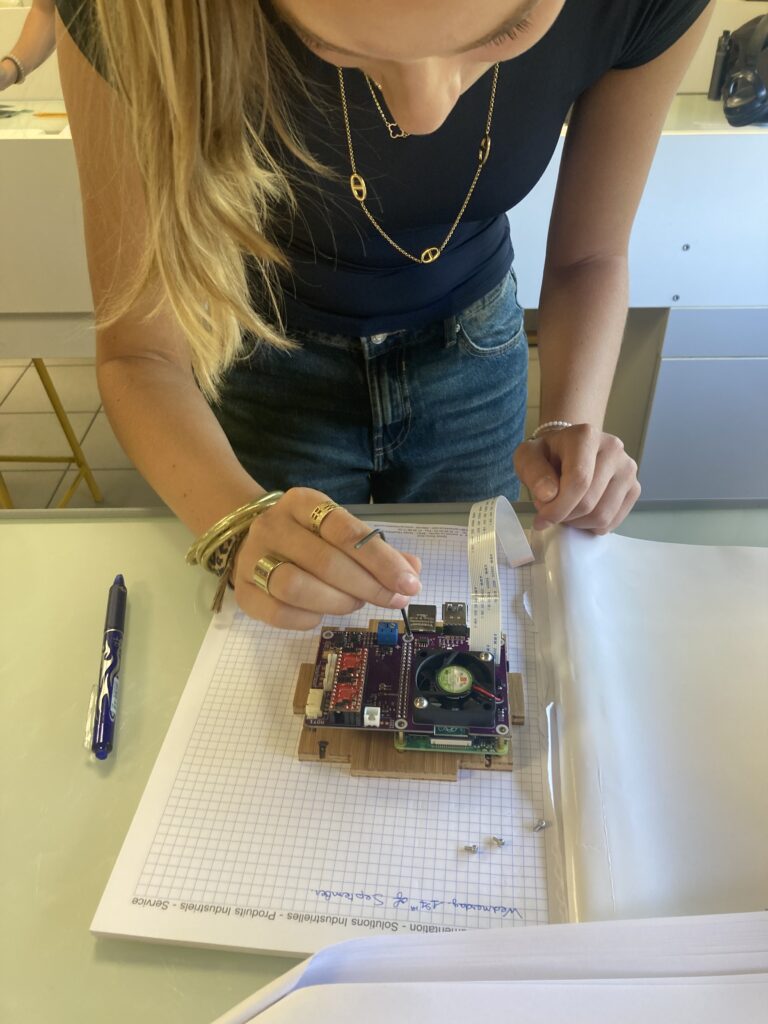
A Raspberry Pi is the ‘brain’ of our Planktoscope (located under the vent in the picture). It is connected to a camera with two lenses (this is the microscope!). Water flows through a specific path, and we observe it through a very thin glass window. This window can be moved using two motors, allowing us to focus on different points. Putting together the fluidic path is our next step!
Hello!
Hello, we are the artolab team, a scientific school club at our highschool, Antonin Artaud, in Marseille. It is an English-speaking club, which is why the blog is in English!
Margot and Khallil are building Cosmic Watch muon detectors. Muons are cosmic particles that rain down from space through the atmosphere.
Jade, Louane, Laura, Luana and Emma are building a Planktoscope. This is a special microscope that allows us to observe planktons in water samples.
Yanis challenges himself with Python coding and is trying to model the gravitational attraction between celestial bodies.
And finally, Jasmine is taking care of this blog along with Mr Guigue!
In these articles, we will share our adventures throughout this year.